Keeping track of attendance should not feel like a daily hassle. Whether you are running a classroom, managing a small office, or organizing a community event, a simple, low-cost solution can go a long way. This RFID based attendance system using Arduino reads RFID cards to automatically log check-ins and check-outs, shows updates on an LCD, and stores attendance logs with real-time stamps using an RTC module. It's completely offline and stores data locally, so no need for an internet connection. The total cost is just around $30.
Why Choose Arduino for DIY RFID Attendance Tracker?
Arduino gives you full control over the system’s features without depending on expensive or limited commercial options. The MFRC522 RFID reader is accurate, and combining it with real-time clock and EEPROM modules means your data is both timestamped and safely stored, even during a power cut. Plus, once built, this setup is fully reusable and expandable for future upgrades like IoT integration or door control.
Key Features of RFID based attendance system
- Automated RFID card scanning for both entry and exit
- Real-time timestamp logging using DS1307 RTC
- Local data storage with EEPROM, survives reboots
- LCD display for live updates
- Menu navigation via push buttons or serial monitor
- Customizable card programming with personal data
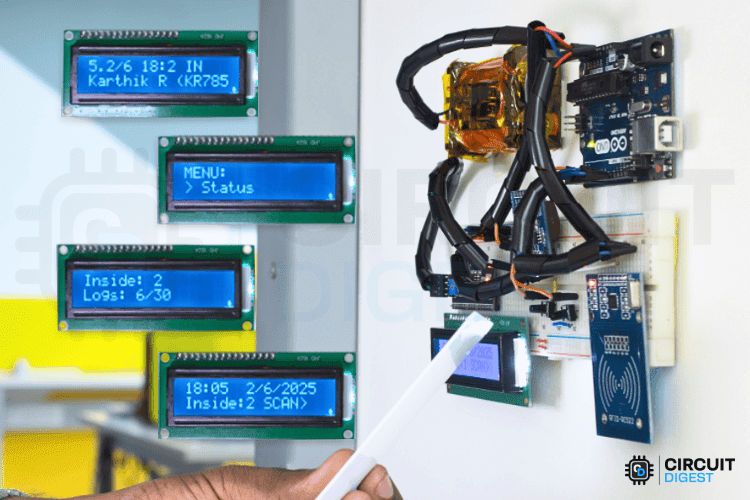
Components You’ll Need
- Arduino Uno
- MFRC522 RFID Reader
- DS1307 RTC Module (with built-in AT24C32 EEPROM)
- 16x2 I2C LCD Display
- Push Buttons (x2)
- RFID Cards/Tags
- Breadboard, jumper wires, and 5V–12V power supply
 Real-World Applications

- Classrooms – Track student attendance and prevent proxy entries
- Offices – Log employee in/out times without manual input
- Gyms & Clubs – Track member usage, ensure hygiene with contactless logging
- Workshops – Monitor visitor entry or workshop sessions
- Healthcare & Industry – Touchless logging for safety zones or shift tracking
This RFID based attendance system using Arduino is a great DIY project for anyone looking to solve a real problem while learning valuable electronics and programming skills. It’s affordable, fully offline, and scalable. Once set up, it can handle real-time check-ins, and you will know exactly how every part works.