Showing posts with label Power. Show all posts

Thursday, 24 April 2025

Types of Current Transformers: A Comprehensive Guide

Types of Transformers

Current transformers (CTs) are important in modern electrical systems, allowing safe measurement and protection in high-current setups like power plants and substations. They convert high AC currents into lower, manageable values for monitoring.

What is a Current Transformer?

A current transformer is a step-down transformer that converts high current in its primary winding to a smaller, proportional current in its secondary winding. This makes it possible to safely monitor high-voltage circuits using instruments like ammeters, relays, and energy meters.

  • Primary Winding: Connected in series with the high-current line.
  • Secondary Winding: Connected to meters or protective relays.
  • Isolation: Both windings are electrically isolated and wrapped around a magnetic core.
Current Transformer Working and Symbol

Types of Current Transformers Based on Applications

  • Metering Current Transformers

These are used for accurate measurement of electrical consumption. Commonly found in residential and industrial metering systems, they are small in size and made from high-grade laminated silica steel. They ensure safe and precise current measurements for billing and monitoring purposes.

  • Protection Current Transformers

Designed to protect electrical systems during fault conditions, these CTs are connected to protective relays that trip the circuit during overcurrent or short-circuit scenarios. They have larger cores made of cold-rolled silicon steel to handle high fault currents (up to 10–20 times the rated value) without saturation.

Current Transformers Based on Applications

Types of Current Transformers Based on Construction

Current transformers can also be classified based on their construction, which affects how they are installed and used in different electrical setups. The main types include bar-type, cable-type, bushing-type, and block-type CTs, each suited for specific environments and current ranges.

Types of Current Transformers Based on Phases

  • Single-Phase CTs

These transformers handle single-phase power systems and are widely used in residential and commercial power distribution. They are straightforward in design and easy to maintain.

  • Three-Phase CTs

These contain three cores (or a three-phase core) and offer simultaneous current measurement across all three phases. They're commonly used in industries, power plants, and energy management systems.

Current Transformer Types Based on Phases

Types of Current Transformers Based on Core Types

Current transformers can also be categorized based on the type of magnetic core used, which directly influences their performance, accuracy, and suitability for different applications. The main core types include wound core, toroidal (ring) core, and split core CTs.

Current transformers come in various forms to serve different roles in electrical systems, from measuring to protection, from compact indoor setups to large-scale industrial environments. Choosing the right type of CT depends on the application, system voltage, and space constraints.

For more in-depth details: Types of Current Transformers

Wednesday, 7 February 2024

What are the different types of Fuse and Where to use them?


A fuse is a special device used in electrical circuits to protect them from damage caused by too much electric current. It works by containing a material that can melt when the current passing through it becomes too high. This melting breaks the circuit, stopping the flow of electricity and preventing further damage. There are different types of fuses for different types of circuits, like those used in homes, cars, and even in high-voltage power lines.

Fuses are divided into two main categories: AC and DC fuses. AC fuses are used in circuits where electricity flows back and forth in a specific pattern, like what we use in our homes. DC fuses, on the other hand, are used in circuits where electricity flows in only one direction, like in batteries or solar panels. Understanding how fuses work and the different types available helps to keep electrical systems safe and working properly.  Learn more information about fuses through the provided article -  different types of Fuse 


Monday, 5 February 2024

Understanding the Types of Battery, It’s Chemistry, and Selection for Everyday Applications

Batteries are everywhere in our daily lives, powering devices like watches, toys, and even electric vehicles. There are two main types: primary, which you can't recharge, and secondary, which you can recharge.


Primary batteries, such as alkaline ones, are used in things like remote controls and pacemakers. They are convenient for devices that don't need a lot of power. On the other hand, secondary batteries, like the ones in phones and electric cars, can be charged and used again. They are suitable for devices that need a lot of power.

There are different kinds of rechargeable batteries, each with its own strengths. For example, Nickel-Cadmium batteries are good for electric vehicles, while Nickel-Metal Hydride batteries are used in high-drain devices. Lead-Acid batteries are reliable and used in things like solar panels, while Lithium-ion batteries are common in phones and gadgets.


Choosing the right battery depends on factors like how much energy it can hold, how quickly it can release that energy, and how safe and durable it is.

Here the detailed explanation about the battery and its types - Different Types of Batteries and their Applications (circuitdigest.com)


Thursday, 26 October 2017

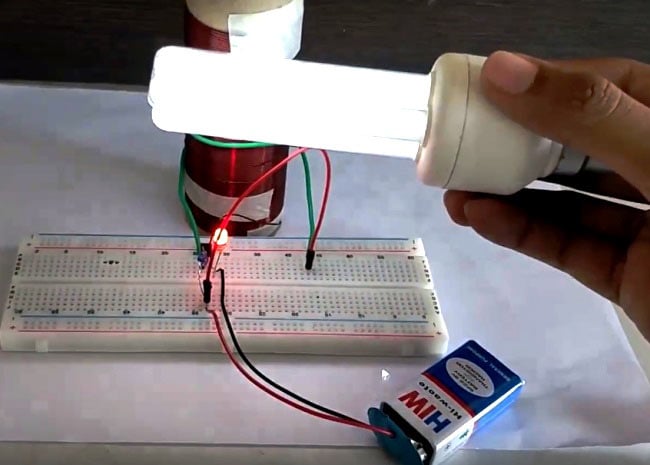
DIY Mini Tesla Coil 9V

What is a Tesla Coil?
A Tesla Coil is a simple coil that creates a high voltage electric field in the air when a small input power is provided, this electric filed is strong enough to glow small light bulbs. This principle was invented by the Nicolas Tesla, who also holds the credit for inventing Induction Motors, AC current, neon bulbs, Remote controls etc..

How to Make a Mini Tesla Coil 9v

So how to make a Tesla Coil?
To make a mini Tesla coil at home in easy way you need following materials:
  1. Magnetic wire a.k.a Enamelled copper wire
  2. 22K Resistor
  3. 2N2222 Transistor
  4. LED
  5. Ordinary breadboard wire
  6. Any non conductive cylindrical object
  7. 9V Battery (or 5V Supply)
  8. Breadboard

Follow the below link to complete DIY tutorial on CircuitDigest.com which will guide you to make this mini Tesla coil.


If you want to see the working of this homemade Tesla coil, please see the video below: