Showing posts with label ExploringRFID. Show all posts

Wednesday, 2 July 2025

RFID-Based Attendance System with Arduino


Keeping track of attendance should not feel like a daily hassle. Whether you are running a classroom, managing a small office, or organizing a community event, a simple, low-cost solution can go a long way. This RFID based attendance system using Arduino reads RFID cards to automatically log check-ins and check-outs, shows updates on an LCD, and stores attendance logs with real-time stamps using an RTC module. It's completely offline and stores data locally, so no need for an internet connection. The total cost is just around $30.

Why Choose Arduino for DIY RFID Attendance Tracker?

Arduino gives you full control over the system’s features without depending on expensive or limited commercial options. The MFRC522 RFID reader is accurate, and combining it with real-time clock and EEPROM modules means your data is both timestamped and safely stored, even during a power cut. Plus, once built, this setup is fully reusable and expandable for future upgrades like IoT integration or door control.

Key Features of RFID based attendance system

  • Automated RFID card scanning for both entry and exit
  • Real-time timestamp logging using DS1307 RTC
  • Local data storage with EEPROM, survives reboots
  • LCD display for live updates
  • Menu navigation via push buttons or serial monitor
  • Customizable card programming with personal data
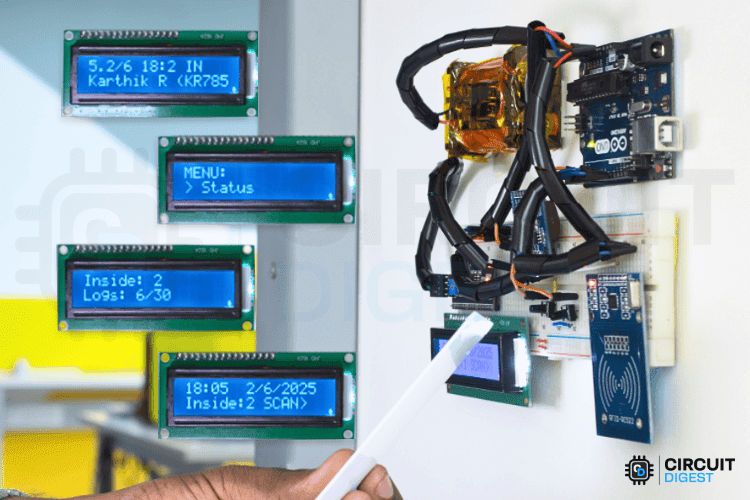
Overview-Image-of-RFID-Based-Attendance-System-Using-Arduino

Components You’ll Need

  • Arduino Uno
  • MFRC522 RFID Reader
  • DS1307 RTC Module (with built-in AT24C32 EEPROM)
  • 16x2 I2C LCD Display
  • Push Buttons (x2)
  • RFID Cards/Tags
  • Breadboard, jumper wires, and 5V–12V power supply

RFID-Attendance-System-Using-Arduino
Real-World Applications

  • Classrooms – Track student attendance and prevent proxy entries
  • Offices – Log employee in/out times without manual input
  • Gyms & Clubs – Track member usage, ensure hygiene with contactless logging
  • Workshops – Monitor visitor entry or workshop sessions
  • Healthcare & Industry – Touchless logging for safety zones or shift tracking
This RFID based attendance system using Arduino is a great DIY project for anyone looking to solve a real problem while learning valuable electronics and programming skills. It’s affordable, fully offline, and scalable. Once set up, it can handle real-time check-ins, and you will know exactly how every part works.

Wednesday, 15 May 2024

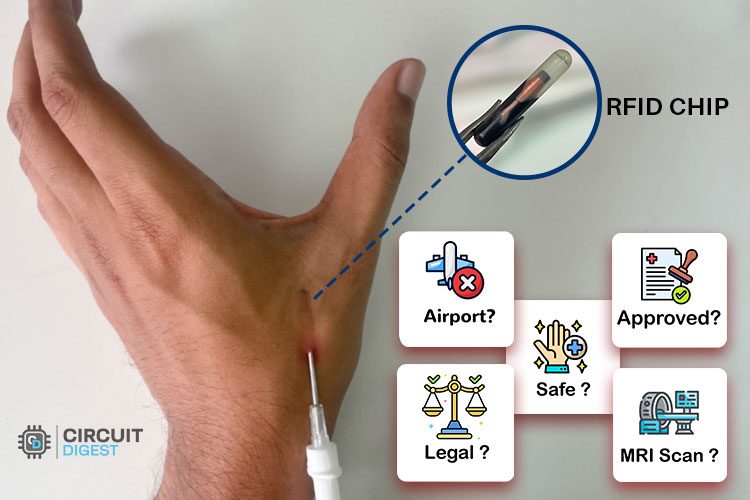
RFID Chip Implants: How Do They Work? Are They Legal and Safe?

In recent times, the integration of technology into our daily lives has reached new heights, with innovations like RFID chip implants capturing the interest of enthusiasts worldwide. In this article, we delve into the practical aspects and considerations associated with this emerging trend.


Understanding RFID Chip Implants:

RFID (Radio Frequency Identification) technology is not unfamiliar to most of us, having encountered it in various applications such as access cards and security tags. The concept of RFID chip implants extends this technology into the realm of biometrics, allowing for seamless integration with our biological systems.


Practical Applications:

Individuals like Mithun Devaiah, an engineer from Bangalore, demonstrate the practical applications of Arduino and RFID technology. With chips embedded in their hands, they showcase how simple gestures can control everyday tasks, from starting vehicles to accessing secured premises.


Accessibility and Safety:

Obtaining an RFID chip implant has become increasingly accessible, with DIY kits readily available online. However, the ease of acquisition raises concerns regarding safety and ethical implications, particularly with self-administered procedures.


Expert Insights:

Dr. Vishal Mishra provides valuable insights into the medical considerations surrounding RFID chip implants. From MRI compatibility to removal procedures, Dr. Mishra emphasizes the importance of cautious evaluation before undergoing such interventions.


Security Concerns:

While RFID technology offers convenience, it also introduces security vulnerabilities. Despite assurances of unique identifiers and limited range, concerns about hacking persist, prompting the need for robust security measures.


The decision to pursue an RFID chip implant is a personal one, requiring careful consideration of both the benefits and risks involved. As we navigate this evolving landscape of innovation, let us engage in informed discussions and prioritize safety and ethical considerations. Feel free to watch our accompanying YouTube video (RFID Chip Implant), where we discussed deeper into this emerging technology.